We much prefer the feel of pedaling a spinning bike over other exercise bike machines. The draw back is that any spinning bike in our price range does not have a way to keep track of mileage and speed. My engineer husband, Greg, solved this problem by setting our spinning bikes up with regular bike computers.
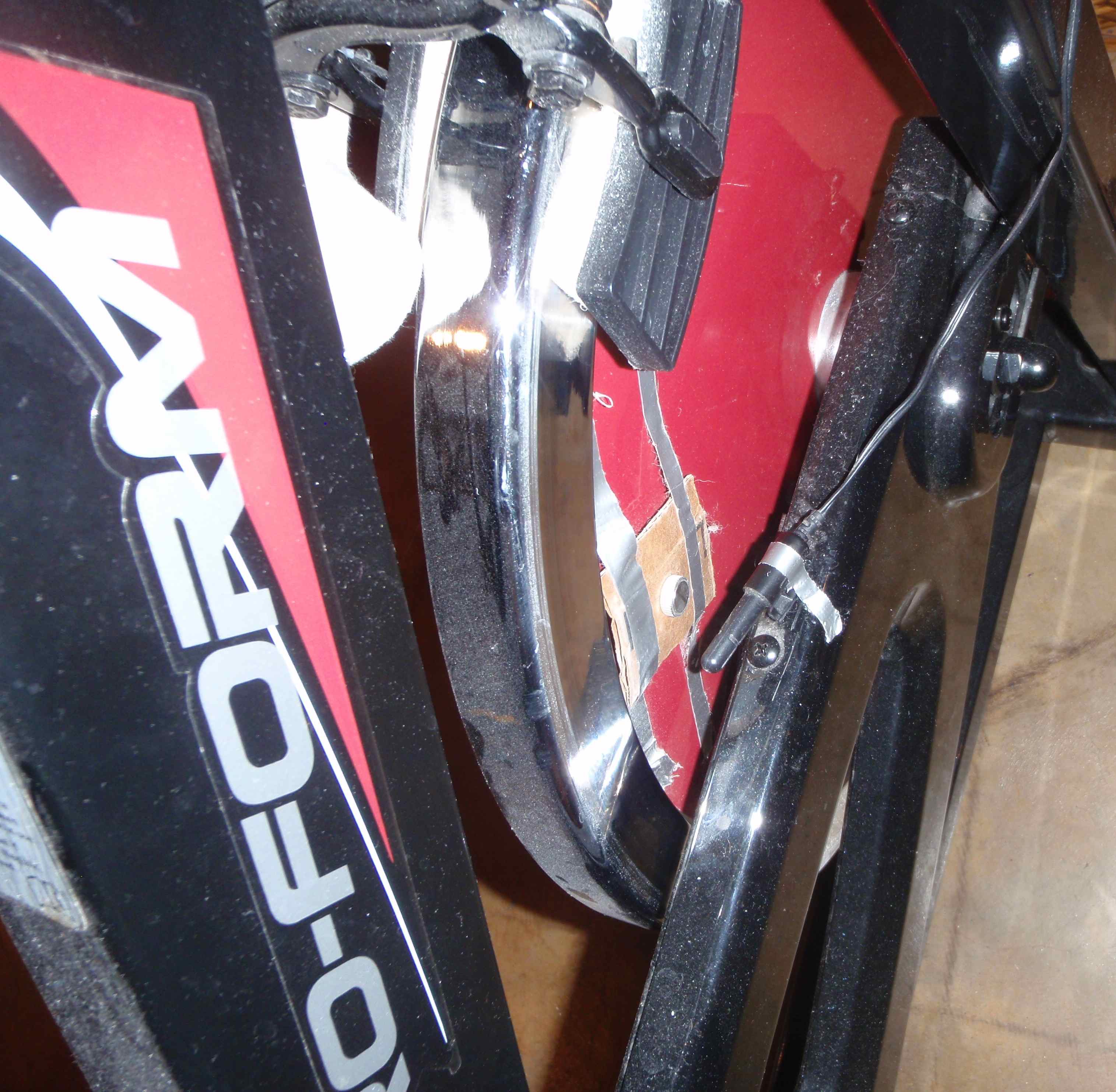
A little cardboard and duct tape secures the-part-that-would-be-hooked-onto-the-bike-spokes (cadence magnet?) to the outer portion of the fly wheel on the spinning bike. (It can’t go on the outer rim, because that is where the brakes apply pressure to adjust level of effort.) Then, the sensor can be taped to the frame at the position the magnet will rotate past. The wire from the sensor to the readout can be guided to dangle along the frame to the handle bars, out of the way of the pedals. Greg says the default setting for the circumference that the cadence magnet would travel was very close to that of where he put it on the wheel, so he just left it.
I would not have thought of this myself. I mention it here for other people like myself that want to find ways to monitor their workout on the spinning bike. It helps me to be able to get an idea of:
- mileage traveled in a session, for comparison between workouts, if nothing else
- approximate miles per hour, although I find that I make it about half as far on the road in the same amount of time
- but it helps me keep a steady cadence and
- having the time display right in front of me in seconds makes power intervals easier to fine tune
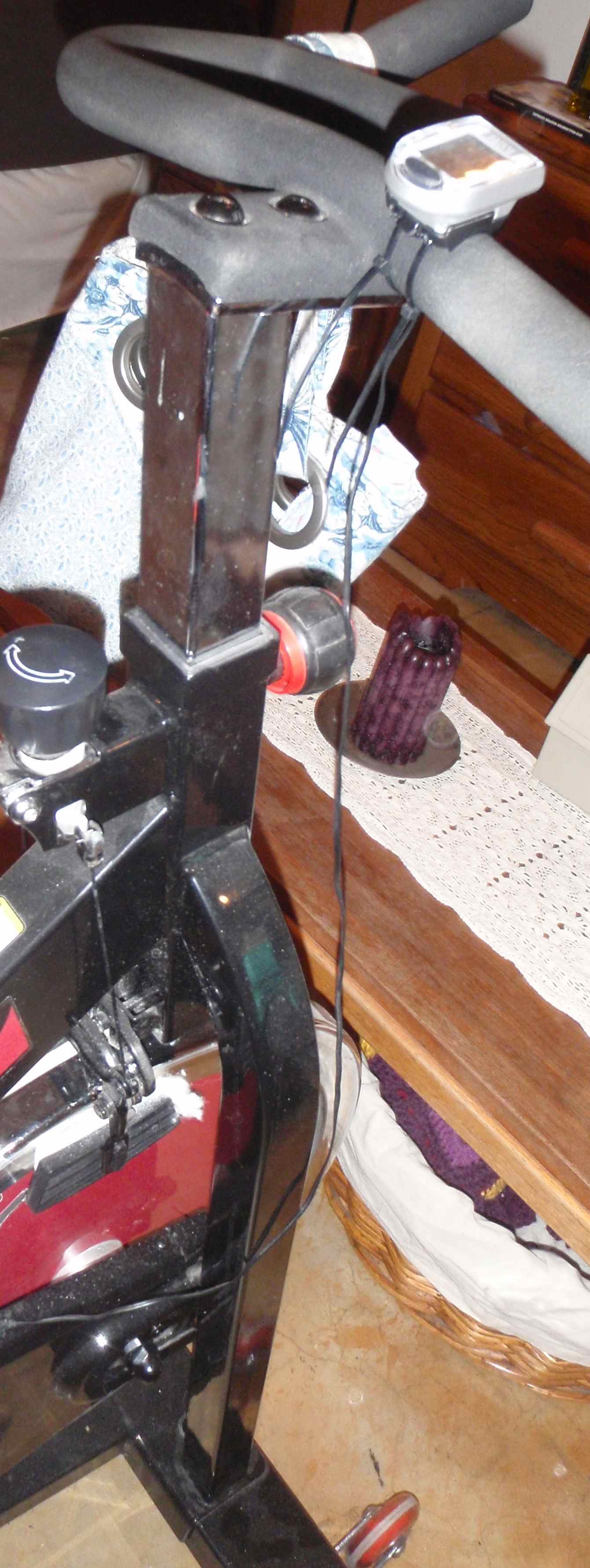
All of this information makes the workout more rewarding. Goals can be made and tracked, which makes it more likely that progress will be made and satisfaction with the workout achieved. With increased satisfaction, I am more likely to continue with the plan. At least one of the triathlon training books that I have suggests using an indoor bike some of the time. Having the bike computer allows me to do that more effectively.
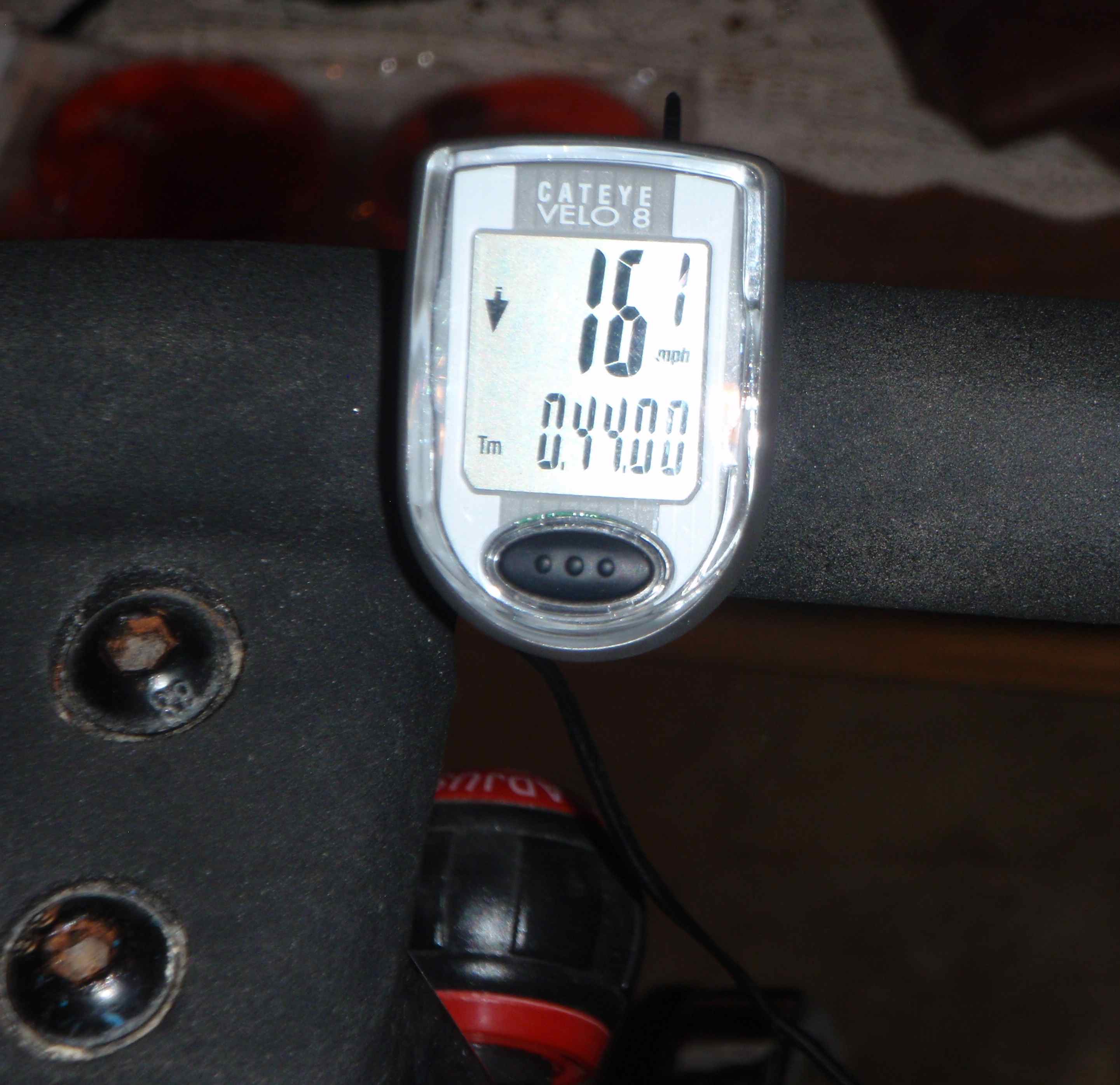
We find the spinning bike is best enjoyed if there is good conversation, a movie, music, or visual entertainment. Having the bike computer available makes it so that I can get lost in whatever is going on for a moment, but a glance shows me what I need to know to keep the workout on track. The engineer in my life makes so many things better!